
 Sam
Sam 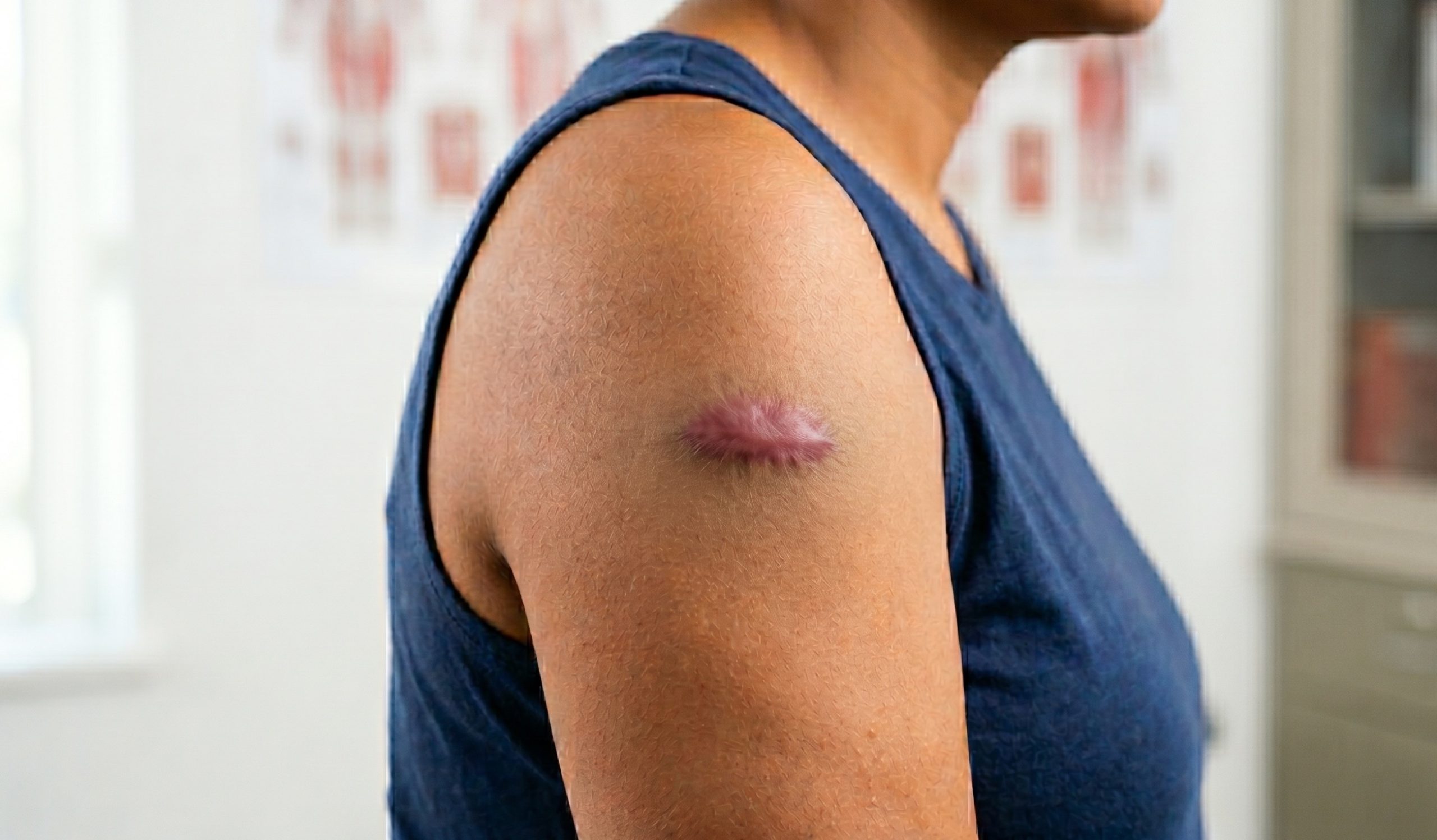
People who tend to form keloids, the raised, thickened scars that grow beyond the edge of the original injury, face a specific consideration with tattoo removal. The same healing response that produces keloids after surgery, piercings, or other skin trauma can sometimes be triggered by laser treatment. The good news is that scarring of any kind is uncommon with modern laser removal; in one large study of more than a thousand patients, raised scarring occurred in well under 1 percent. But for someone who is keloid-prone, the risk is higher and worth taking seriously before starting.
Understanding keloid tendency
Keloids form when the body’s healing response lays down too much scar tissue. Normal scarring stays within the boundaries of the original wound; a keloid keeps producing collagen well beyond it, creating a raised, often darker growth that can continue expanding for months or even years. Any skin trauma can set one off, including tattoos, ear piercings, surgical incisions, and laser treatment.
Keloid tendency varies enormously from person to person. Some people never form them; others develop them from minor injuries. The risk is well established to be higher for people with a family history of keloids, those with darker skin tones (keloids are more common in people of African, Asian, or Hispanic descent), and people roughly between the ages of 10 and 30. Certain body areas are also higher risk: the chest, shoulders, upper back, ears, and jawline.
Keloid risk in tattoo removal
Laser removal creates a controlled skin injury, and in susceptible people that can stimulate keloid formation much like other skin trauma. The risk is not uniform; it rises with more aggressive laser settings, in higher-risk body locations, and in people already known to be keloid-prone. It tends to be somewhat lower with modern picosecond lasers than with older equipment, because they produce less heat damage.
One point that surprises people: not having keloided from the original tattoo does not guarantee safety during removal. The skin trauma of getting a tattoo and the trauma of removing one are different, and they can produce different healing responses.
Assessing your own risk
Before treatment, it is worth honestly working through the factors that predict keloid risk:
- Family history: do parents, siblings, or close relatives form keloids?
- Personal history: have you developed keloids from surgery, piercings, acne, or cuts?
- Skin type: darker Fitzpatrick skin types carry higher baseline risk.
- Previous tattoo response: did the tattoo itself cause raised scarring when you got it?
- Other healing history: have piercings or minor injuries produced unusual scarring?
- Location: is the tattoo in a higher-risk area like the chest or shoulders?
Disclosing all of this during a consultation is essential. It is the information a good practitioner needs to plan safe treatment, or to advise against it.
A cautious treatment approach
For someone with known or suspected keloid tendency who decides to proceed, a careful approach matters: conservative laser settings chosen to reduce risk, a test spot before treating any larger area, and an extended observation window after that test (often 8 to 12 weeks) to see whether a keloid forms. Strict aftercare, attention to any unusual scarring, and modified session spacing to support healing all help. If risk is significant, a good practitioner will also discuss whether to proceed at all.
Why the test spot matters
For keloid-prone patients, a test spot does real work. It reveals whether the skin will keloid in response to the laser before a larger area is committed to, lets the practitioner evaluate the skin’s response to specific settings, and informs the decision about whether to continue or pursue an alternative. Because keloids can take time to appear, the test area should be watched for at least 8 to 12 weeks before moving ahead.
If a keloid begins to form
If raised scarring starts developing during treatment, the right response is to stop and consult a dermatologist about managing it. Options for an existing keloid include corticosteroid injections, silicone sheets, and surgery (though surgery itself carries a high recurrence risk), among others. It is also a moment to reassess whether to continue removal at all. Sometimes accepting partial fading plus keloid management is the better outcome than pushing toward complete removal at the cost of more scarring.
Alternatives for higher-risk patients
When keloid risk is significant, removal is not the only path:
- A cover-up tattoo that obscures the original rather than removing it, sometimes preferable to the risk of keloid formation.
- Surgical excision for small tattoos only, which still carries keloid risk but is a single event rather than many sessions.
- Accepting the existing tattoo, which for some people in some situations is the better trade.
- Modified goals, aiming for significant fading rather than complete removal, allowing a shorter, less intensive course.
An open discussion of these options during consultation is what supports a genuinely informed decision.
Recognizing early keloid formation
Signs that a keloid may be developing include raised scarring at the treatment site that does not flatten over time, scarring that spreads beyond the treated area, persistent itching or sensitivity, scarring that keeps growing in the weeks to months after treatment rather than settling, and pigment changes alongside the raised tissue. Catching it early allows earlier intervention.
Body location and risk
Location matters. The chest, shoulders, and upper back are the highest-risk areas for keloids, followed by the ears and the jawline. The ankle, foot, and hand are moderate risk, while the inner arm and abdomen are lower risk. For a keloid-prone person, the location of the tattoo can reasonably affect the decision about whether to treat it at all.
The honest discussion
A good consultation for a keloid-prone patient covers the relevant family and personal history, a realistic assessment of individual risk, how that risk shapes the treatment plan, and frank acknowledgment that some people should not proceed. It includes clear informed consent about the possibility of keloids, and alternative recommendations where risk is high. A practitioner who waves off keloid risk for a clearly high-risk patient is not serving that patient well.
The practical takeaway
For keloid-prone people considering removal, the path is: disclose all relevant history, start with a test spot and a long observation window, proceed conservatively if at all, keep alternatives genuinely on the table, and hold realistic expectations about both results and risks. Some people with a keloid tendency complete removal successfully with appropriate caution. Others decide the risk is not worth the benefit. Either can be the right call, and it depends on individual circumstances and an honest assessment of personal priorities.
A note on this guide
Tattoo Takeoff is an independent, research-based resource. It is not a clinic and does not perform removal, and nothing here is medical advice. Keloid risk is genuinely individual, so anyone who scars easily should discuss it directly with a board-certified dermatologist before pursuing removal.
Sources
- American Academy of Dermatology / WebMD overview, “Laser Tattoo Removal: Procedure, Benefits, and Risks”
- Cleveland Clinic, “Keloid Scar” (risk factors: family history, darker skin, ages 10–30)
- Journal of Clinical and Aesthetic Dermatology, “The Incidence of Hypertrophic Scarring and Keloid Formation Following Laser Tattoo Removal with a Q-switched Nd:YAG Laser” (incidence 0.28%)
Last reviewed: June 15, 2026. We update this guide as we learn more.
